
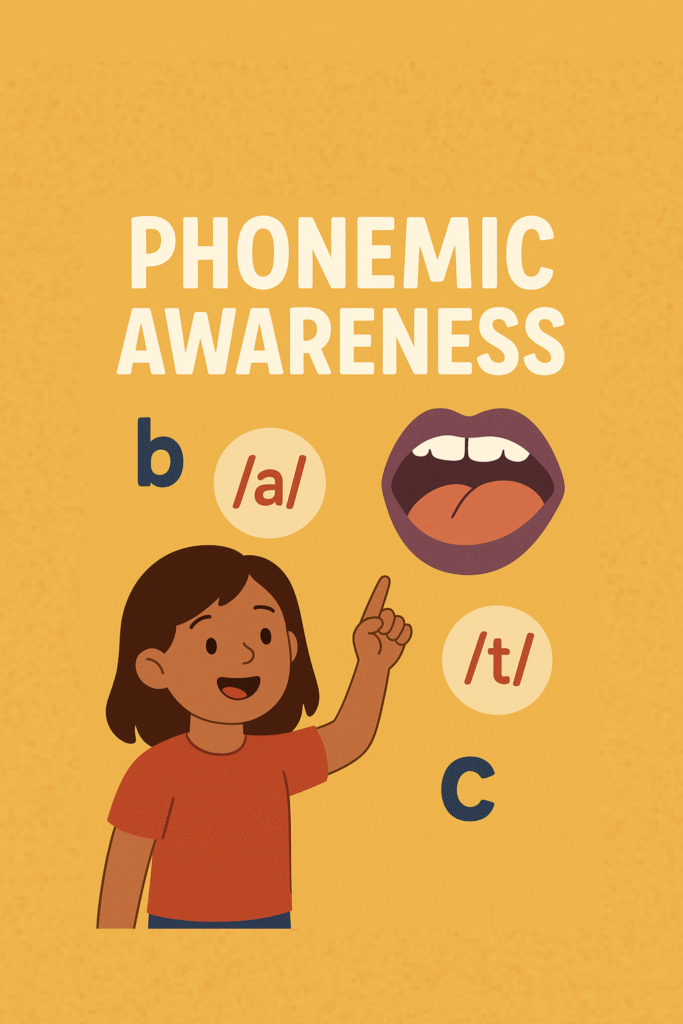
Phonemic Awareness

Phonemic Awareness: The Key to Early Reading Success

Phonemic awareness is the ability to hear, recognize, and manipulate individual sounds (phonemes) in spoken words. For example, knowing that the word cat has the sounds /c/ /a/ /t/ or changing the /c/ in cat to /h/ to form hat.

Unlike phonics, phonemic awareness is auditory only. Children don’t need to see letters yet—they’re simply training their ears to hear the building blocks of words.

Why Phonemic Awareness Is Important for Reading

Strong phonemic awareness is one of the best predictors of reading and spelling success. Here’s why this early reading skill matters:

01

Bridges spoken and written language

It helps children understand that letters represent sounds.

02

Supports decoding and phonics

Children can sound out words more easily.

03

Boosts spelling ability

Recognizing sounds makes it easier to write words correctly.

04

Builds confidence

Children approach books with less frustration and more excitement.

How to Teach Phonemic Awareness at Home or in the Classroom

Parents and teachers can develop phonemic awareness with fun and simple activities—no worksheets required! Try these strategies:

Rhyming Games – Use nursery rhymes and ask children to find words that sound alike.
Sound Matching – Play “I spy” with beginning sounds (e.g., “I spy something starting with /b/”).
Clap It Out – Clap syllables or sounds in words. Example: but-ter-fly.
Word Play – Swap sounds to make new words (cat → bat → hat).
Songs and Chants – Repetitive songs like “Down by the Bay” reinforce sound awareness.

Shopping Cart